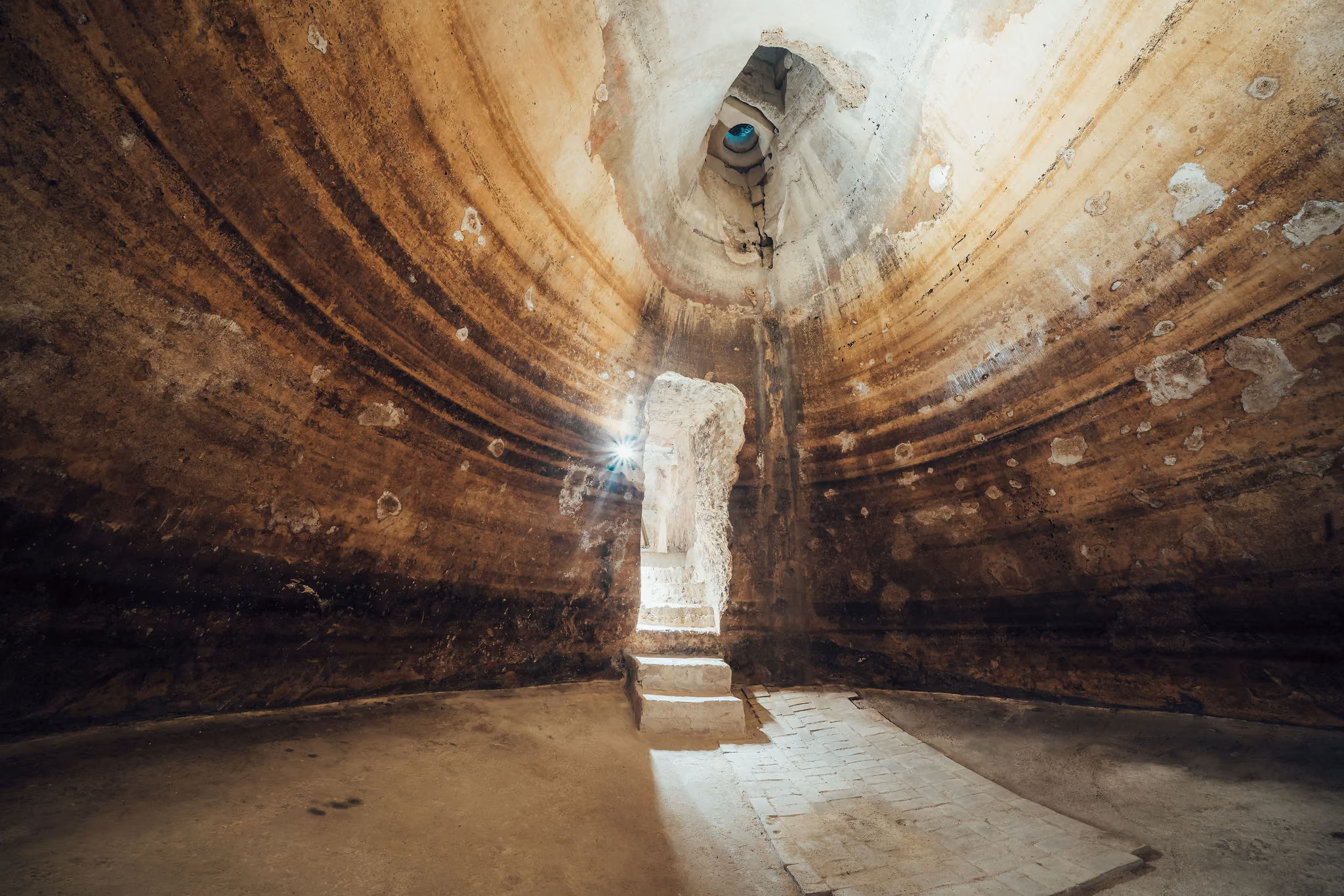
Acoustic Cistern

The name “Murge” derives from *murex*, the murex, a mollusk whose shell evokes the image of a sharp, pointed stone. In terms of their geological and morphological composition, the Murge constitute a plateau closely linked to water.
The formation of the Murgia began with the sedimentation of submarine rock that trapped fossilized organic material within it. Over time, this formation evolved into what the locals commonly call “tufo,” a limestone rock carved for thousands of years by rivers that have deeply eroded it. This relentless action of water has created spectacular rock gorges called gravine, which reach depths of 100 meters and widths of over 200 meters.
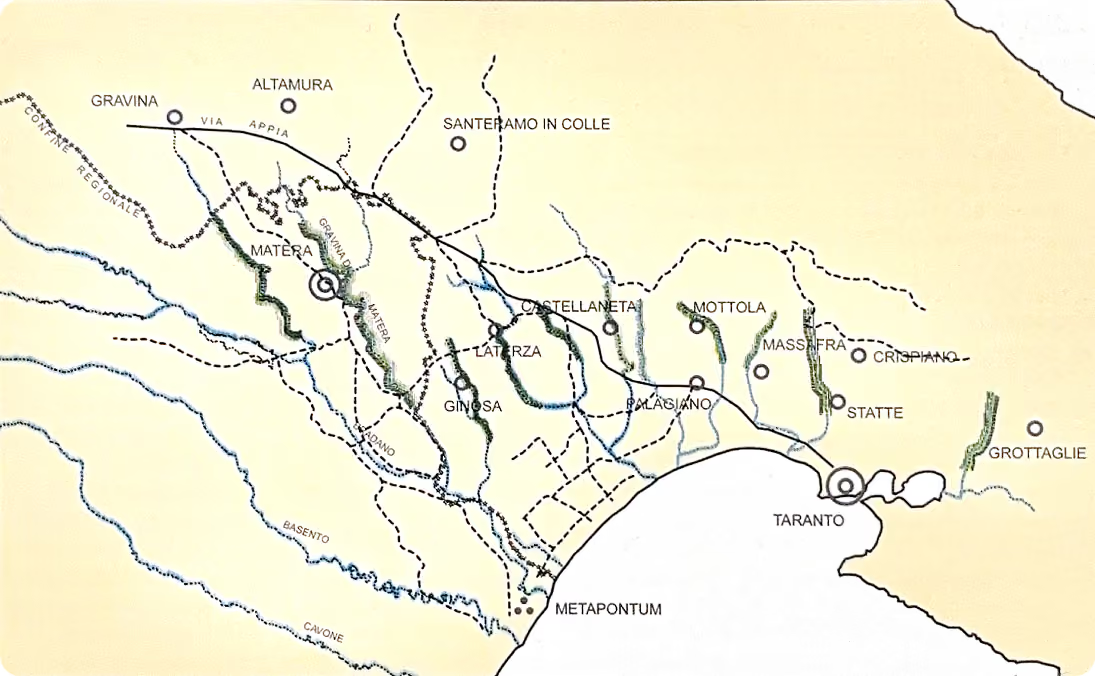
, Giannatelli Editions
Each of these ravines was the cradle of a community: each carefully chosen by its inhabitants, each rich in water, arable land, and forests, each with ideal characteristics, inhabited since Neolithic times by Italy’s earliest farmers. The culture of emptiness and excavation is inherent to the Murgia region.
The karst landscape, characterized by caves, gorges, and immense sinkholes, has guided humans in the search for and accumulation of the primary resource essential to their survival: water.
Matera was born amidst these rushing rivers, the Grabiglioni. Where water once flowed fleetingly, the people of Matera learned to retain it, safeguard it, and conserve it.
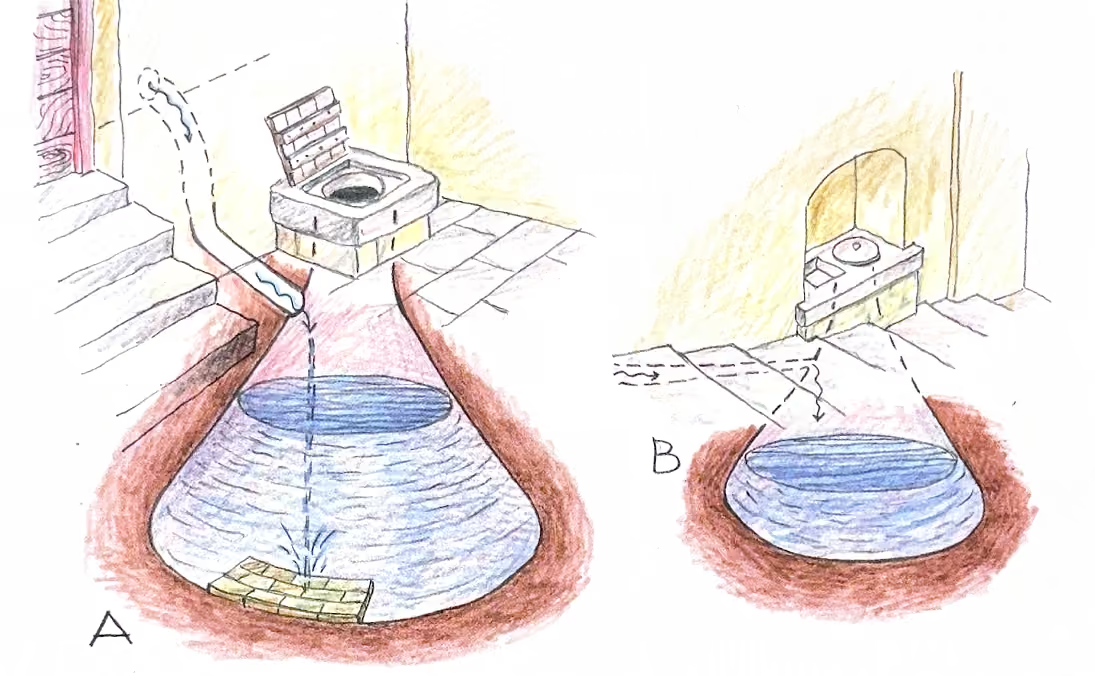
The cisterns—one or more for each home, patiently carved into the limestone rock—are the beating heart of this civilization. A widespread collection system transforms the rooftops and streets into an intricate network of underground channels and reservoirs, where rainwater is jealously guarded to help the community survive long periods of drought.
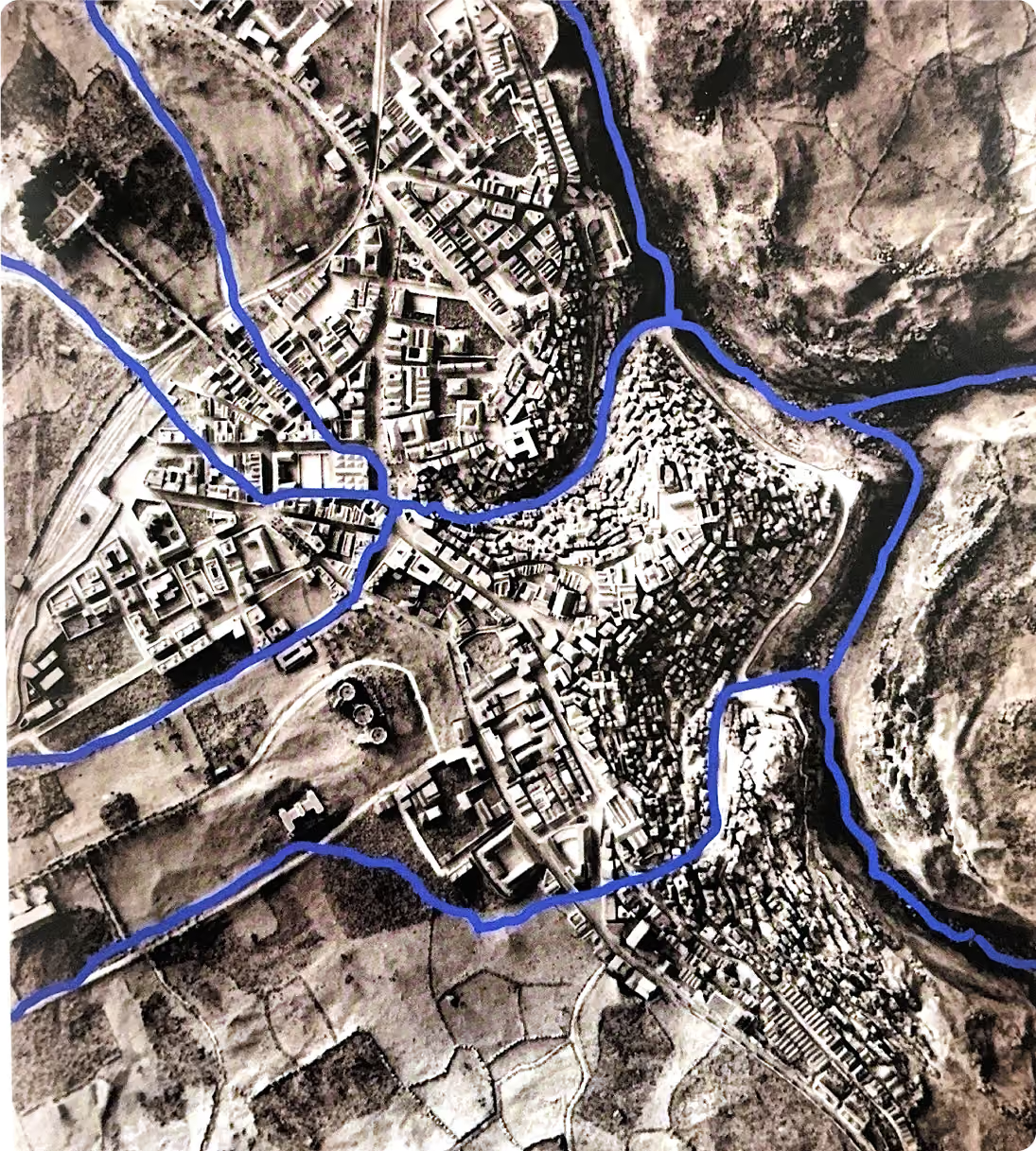
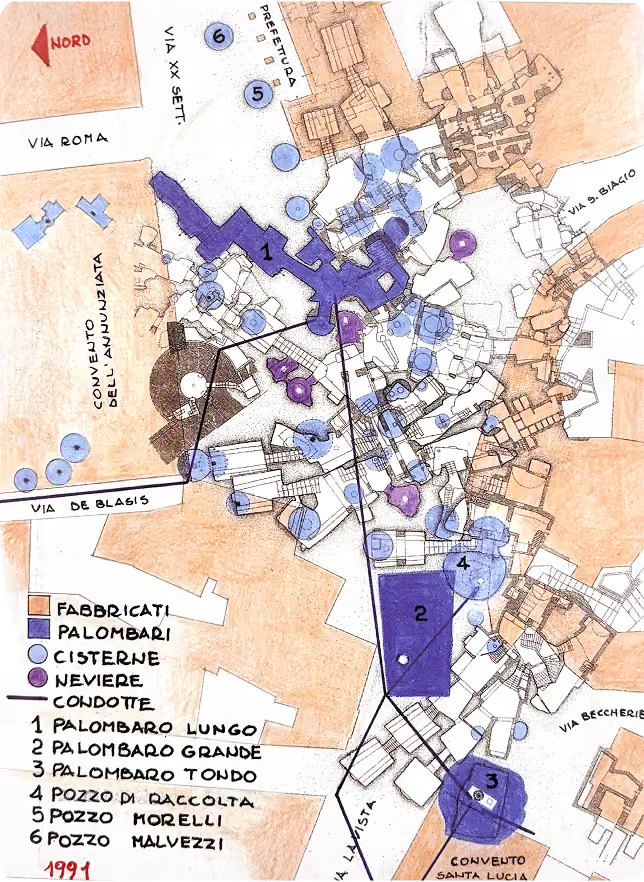
The city’s complex system for regulating and collecting rainwater is the structure that most impresses with its engineering ingenuity and sheer scale. There are thousands of cisterns in the basements of the ancient districts and many “palombari.”
The image on the right shows a small portion of the city: the layout of Matera’s central square, with what lies beneath it. Among the approximately 50 cisterns of various sizes is the “Palombaro Lungo” (1), a reservoir with a capacity of 2,338.86 cubic meters.
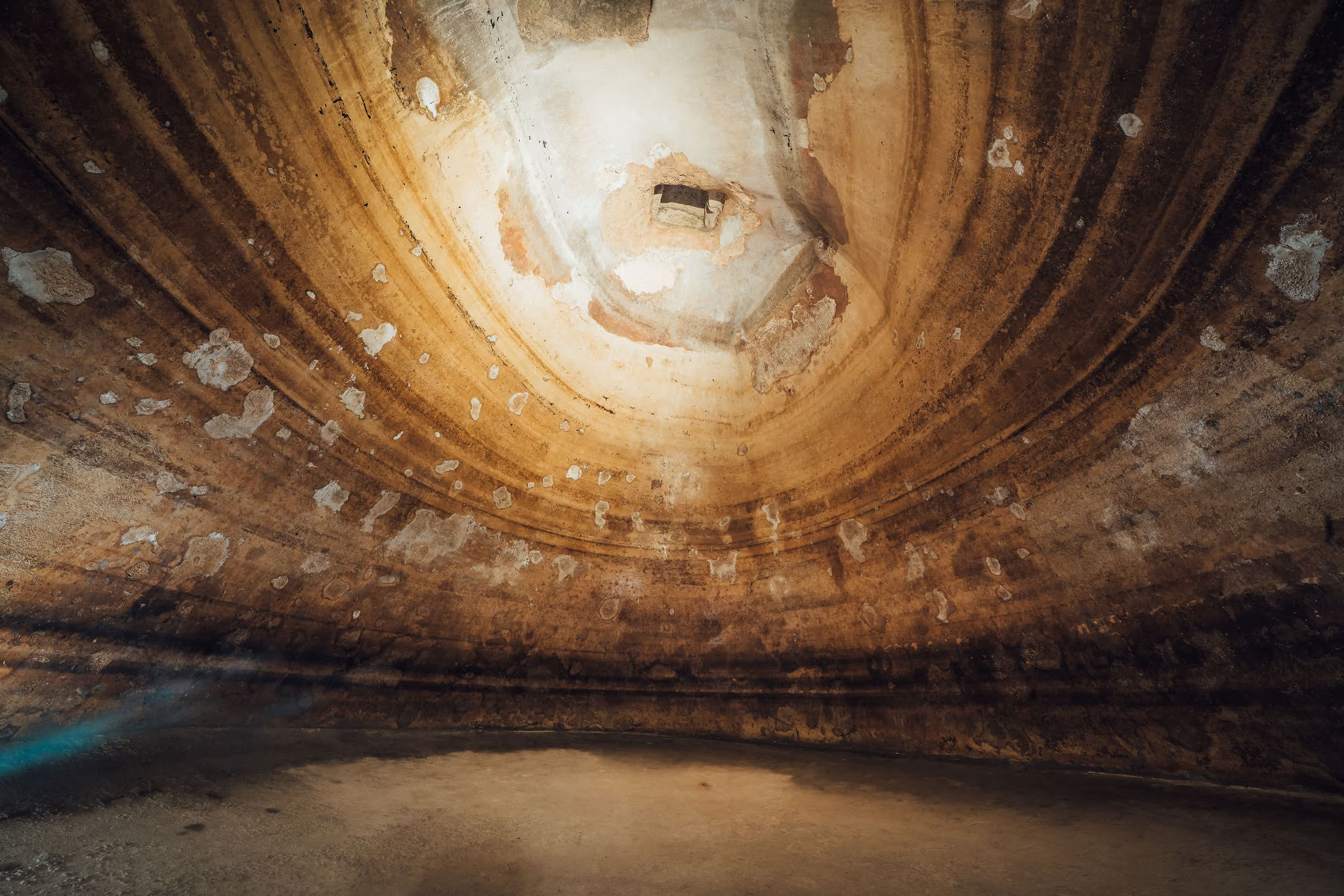
The walls of the cisterns and water tanks are lined with cocciopesto, a remarkable hydraulic mortar made of lime and fragments of crushed terracotta. This reddish plaster, applied by hand to every excavated surface, creates a waterproof barrier that has withstood the test of time without losing its effectiveness.
by Enzo Viti and Teresa Lupo
In FOVEA, within its extraordinary cistern, the cocciopesto walls still bear the imprints of the water that stagnated there for decades: a score without a key, where every line is a sound wave waiting to be heard.
Today, sound takes the place of water. The artist plays the space; the air around him becomes sound matter, and the frequencies seek their natural resonance, finding it as they envelop you completely.
Close your eyes and let yourself be immersed.

Take this piece of history with you.
The next one is waiting for you!