
Cave House - FOVEA Bar

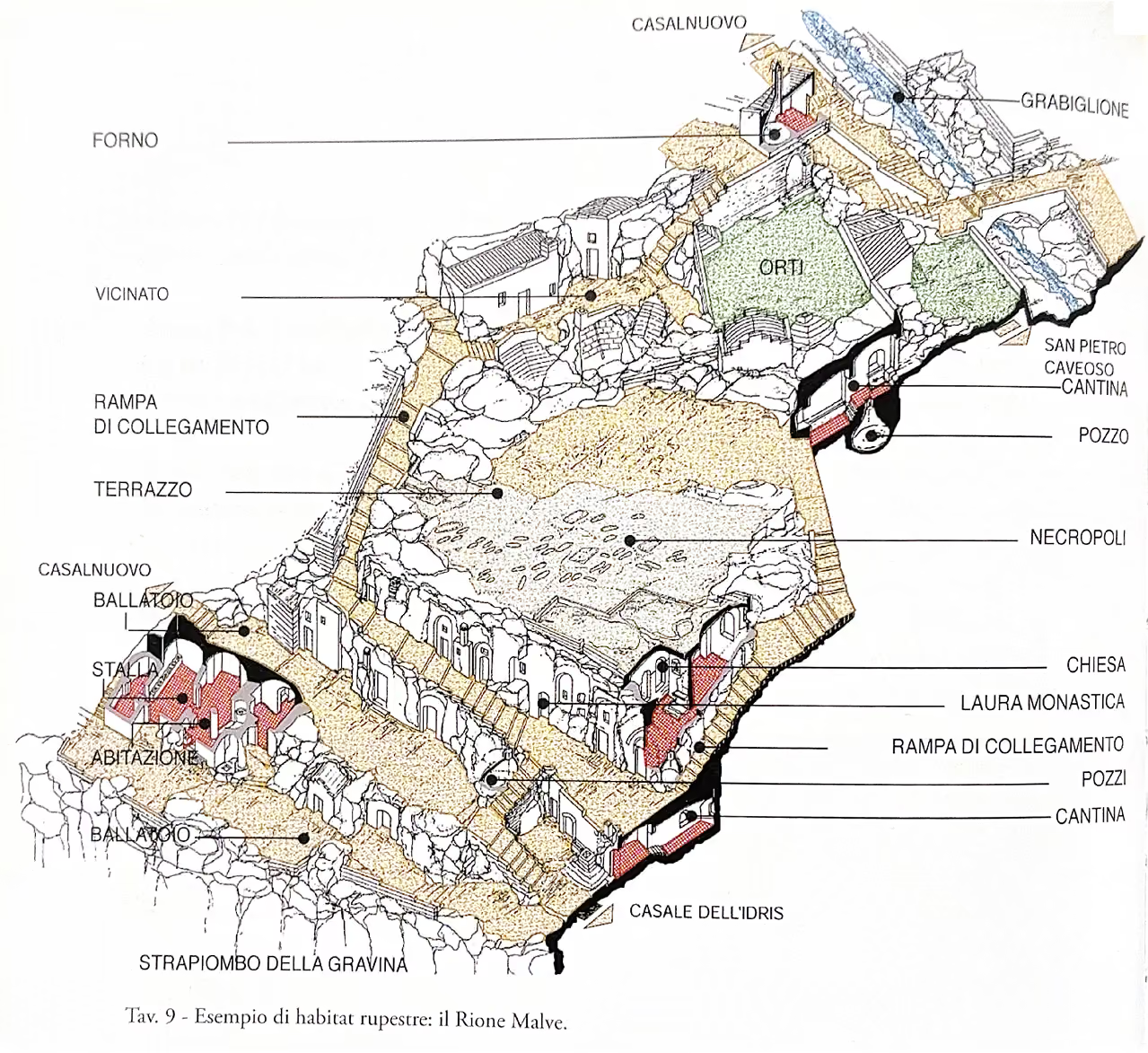
The phenomenon of cave dwellings in the city of the Sassi has been documented since ancient times. The symbiosis between the inhabitants of the ancient neighborhoods and the Murgia Plateau finds its fullest expression in the practice of living underground. For millennia, life in the ancient neighborhoods—immersed in nature—has been in harmony with what is known as the rock habitat.
Throughout history, humanity’s need to seek shelter by shaping rock to suit its customs and traditions has been met through ancient and sophisticated techniques for working calcarenite, which are rooted in Mediterranean traditions.
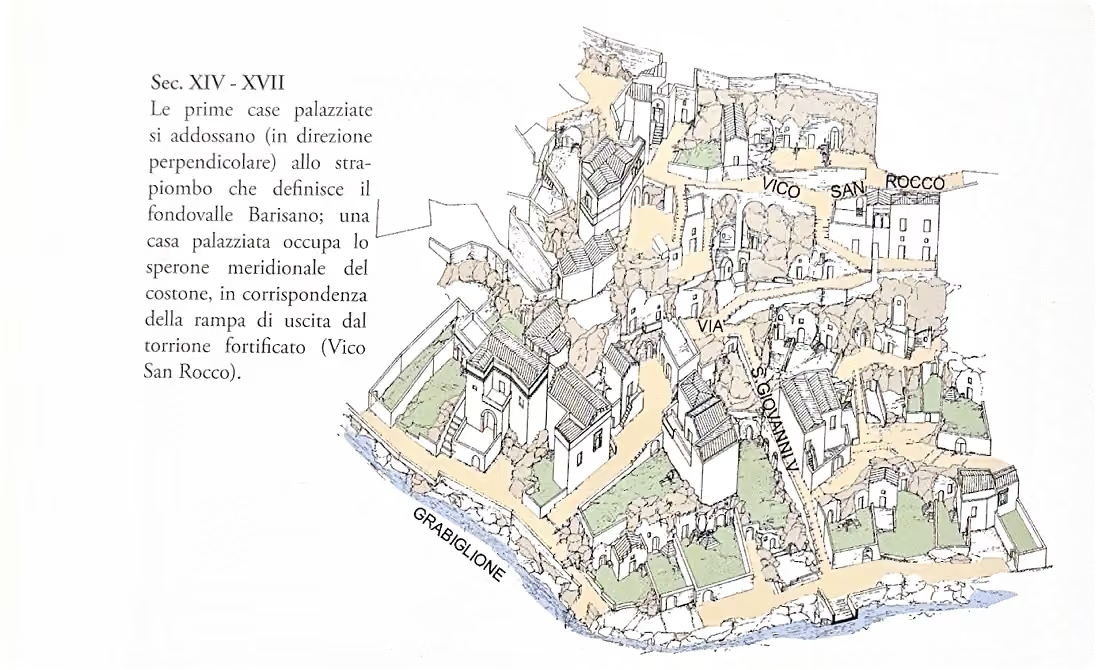
Until the 17th century, the diverse community of the Sassi di Matera lived in harmony, with cave dwellings interspersed with noble mansions.
“A city in which the sharing—in a predominantly rural economy—of land management (civic uses), not yet confined by the rigid rules of bourgeois and capitalist property, and the sharing of urban spaces — where the laborer’s humble home and/or cave stood side by side with, and almost intertwined with, the most beautiful and opulent mansions of the wealthy — somehow mitigated the severe problems faced by urbanized agricultural laborers, which were gradually worsening.”
Quoted from Lorenzo Rota, “Matera: History of a City,” Edizioni Giannatelli
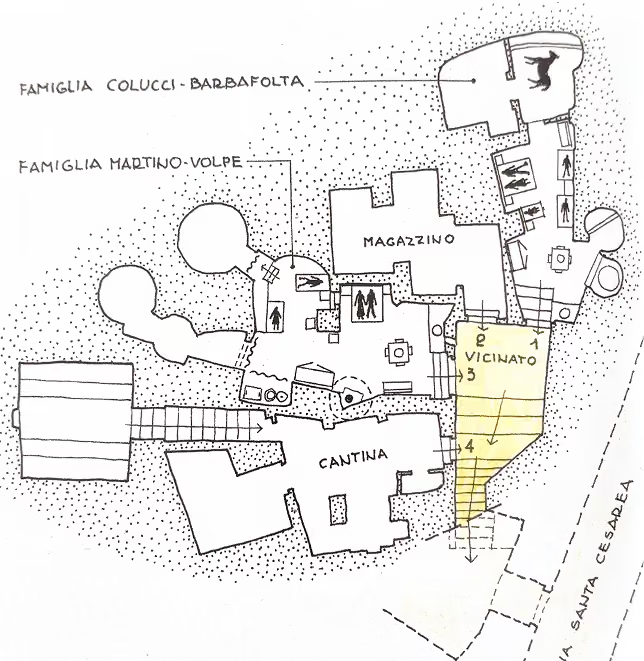
Matera and the Sassi: the two cities that, in the early 20th century, were urbanistically structured around the bourgeois city on the plain, which continued to grow in modernity and prosperity at the expense of the miserable living conditions in the Sassi districts—relegated to a veritable ghetto that became a national disgrace in the 20th century.
We quote the words of the Honorable Francesco Saverio Nitti from 1910, taken from the “Proceedings of the Parliamentary Commission of Inquiry into the Conditions of Peasants in Southern Italy and Sicily”:
“[…]During our journey, we have not witnessed a more horrific sight than the dwellings of the peasants of Matera: carved into the bedrock are several hundred houses, with one, two, or three rooms. […] Matera is a region characterized by large estates: some of the major landowners are absentee, others indifferent. The very people accompanying us, perhaps out of long-standing habit, were far from sharing the sense of horror we felt. Now, when one considers that Matera is the largest urban center in Basilicata, that the municipality has over 17,000 inhabitants, and that it has a subprefecture, a courthouse, and numerous schools—including a royal high school—one is surprised that such horrific conditions can persist.[…]We cannot explain how a bourgeoisie that proclaims itself to be progressive
It is indifferent to the persistence of such a shameful situation. […] Those horrible hovels in Sasso command exorbitant rents.
[…] A farmer from Sasso told us: “The owners of the houses are the ‘respectable men’ of the town, who snatched them up for a pittance when church property was confiscated.”[…] Many told us: “We don’t go to America because we can’t afford the trip.” And this is common in areas dominated by large estates.”
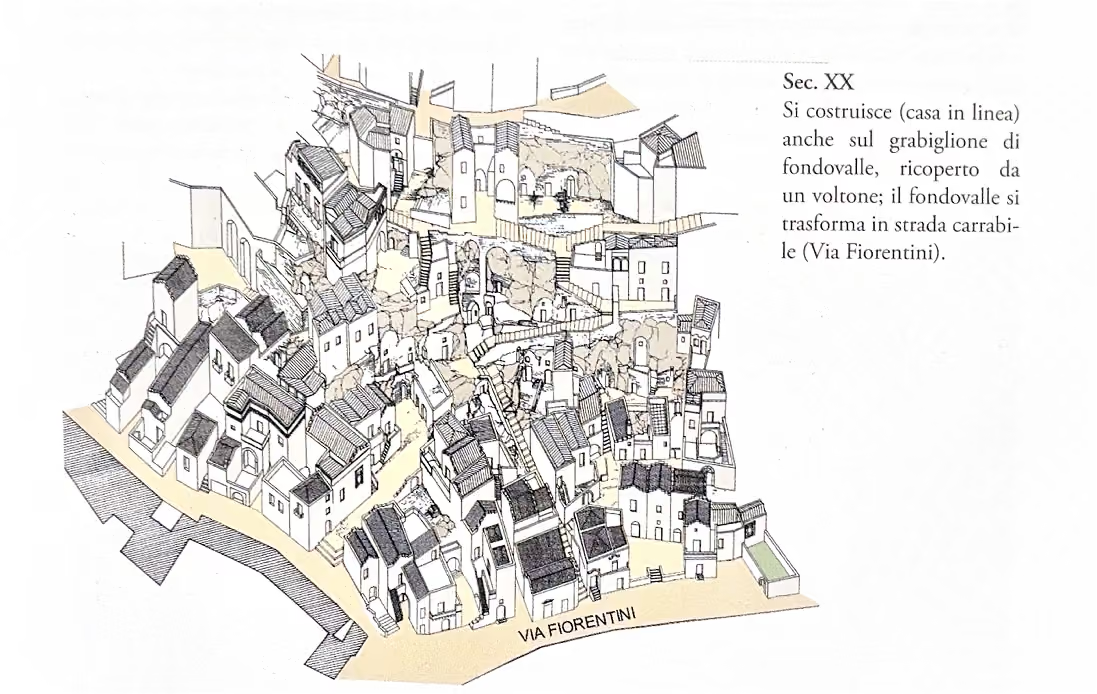
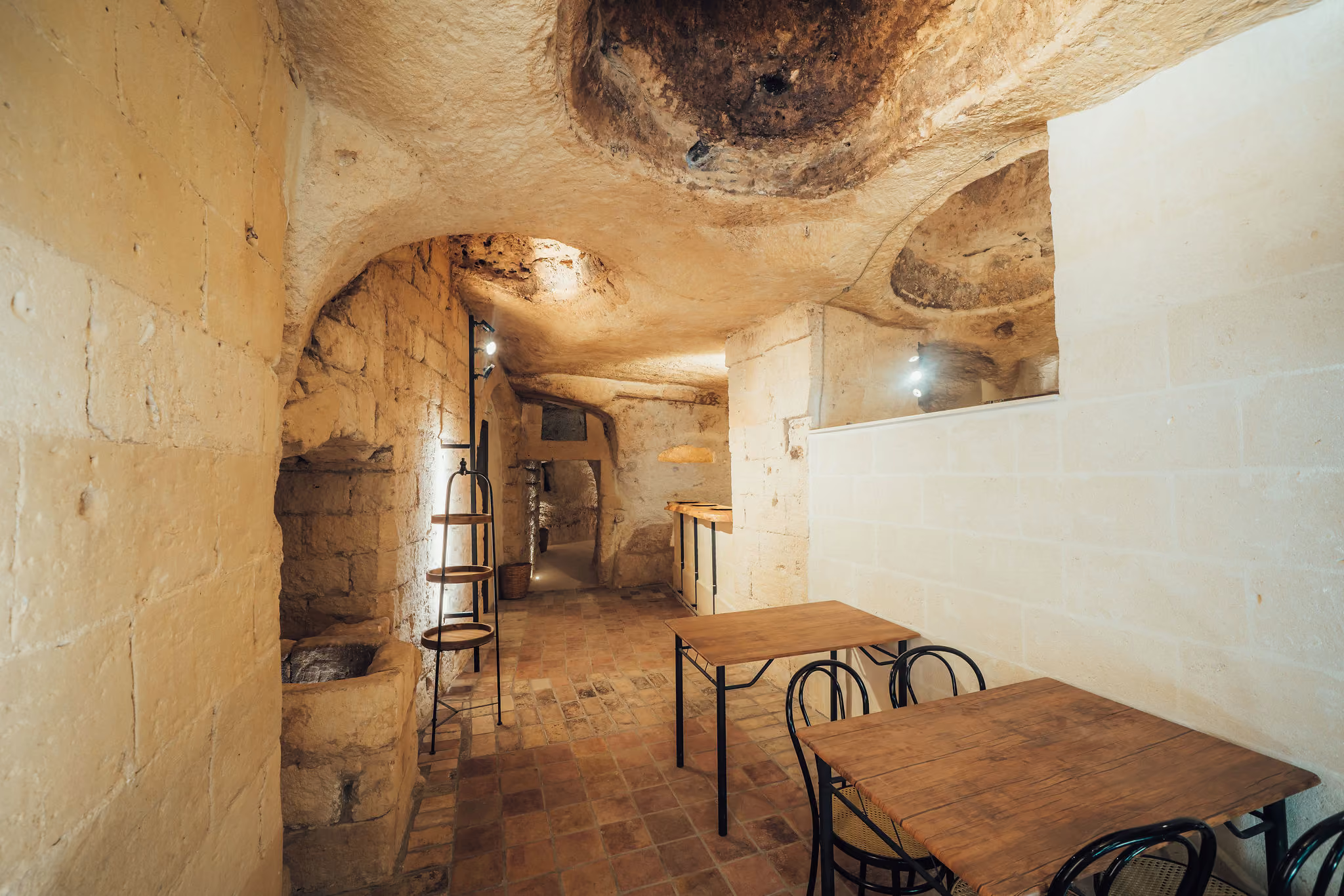
Among the sites at FOVEA is an authentic cave dwelling, inhabited until 1950, which serves as a vivid testament to how rural communities sought refuge in underground dwellings during times of extreme poverty.
For generations, these underground spaces were not merely shelters, but actual homes, where entire families adapted to life in the rock with ingenuity and dignity.
Today, this cave house is home to the FOVEA Bar, which has preserved the wonderful original wood-burning stove: an object of extraordinary functional beauty, the heart of the home that provided warmth, cooked meals, and sustained daily life.
Here, memory is not frozen in time but remains tangible, accessible, and a living part of the FOVEA experience: a direct bridge between Matera’s recent past and its contemporary cultural renaissance.

Take this piece of history with you.
The next one is waiting for you!