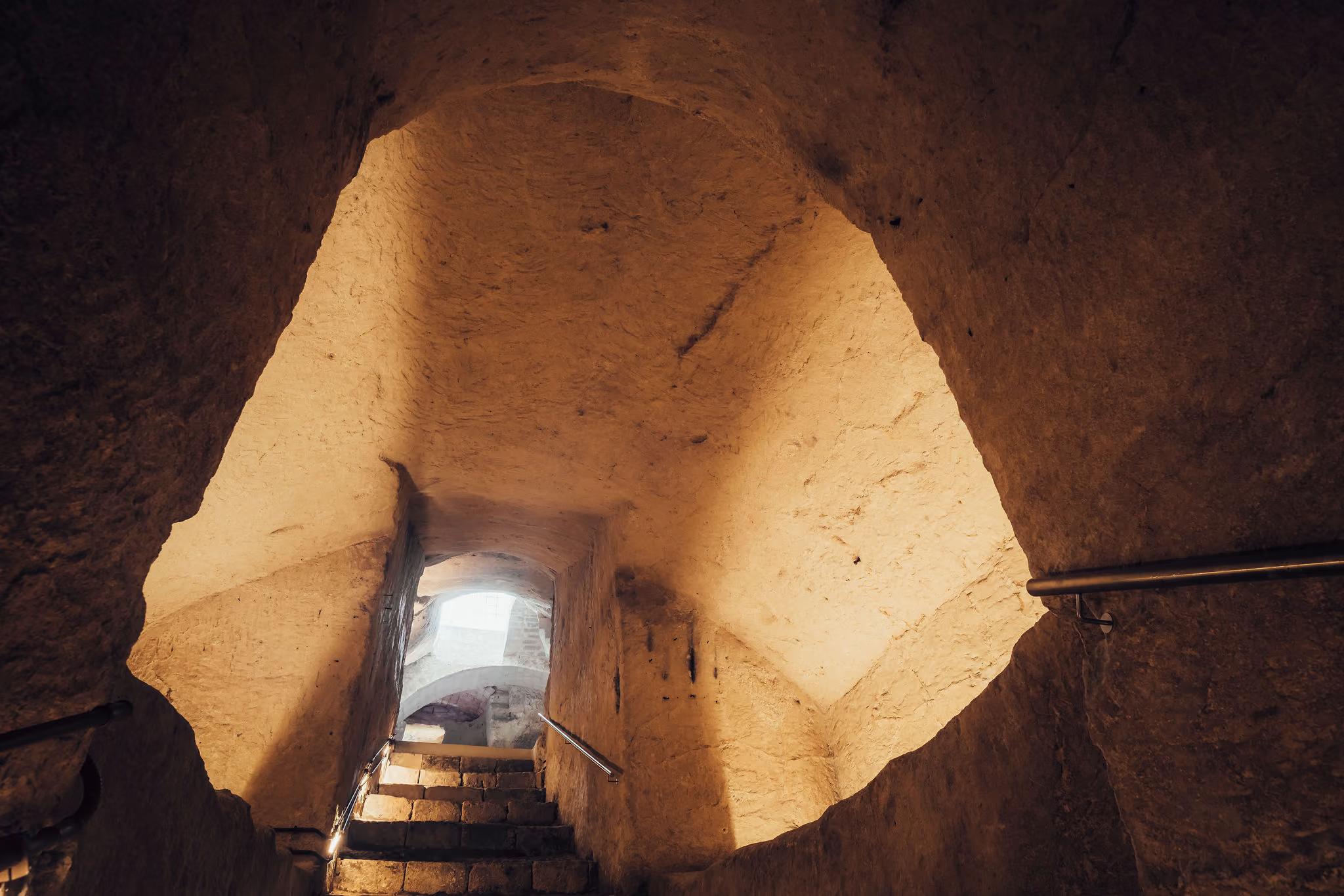
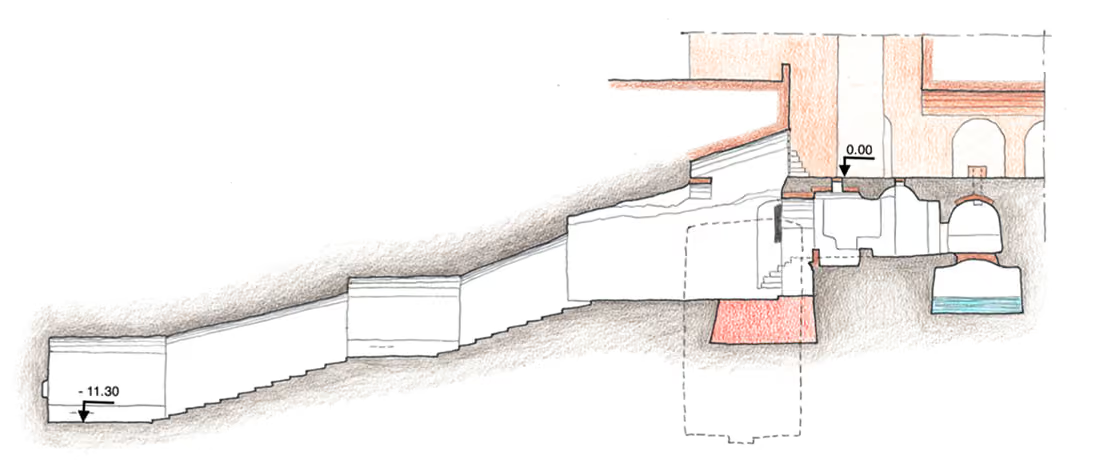
11 Meters Underground
The Wine Cellar

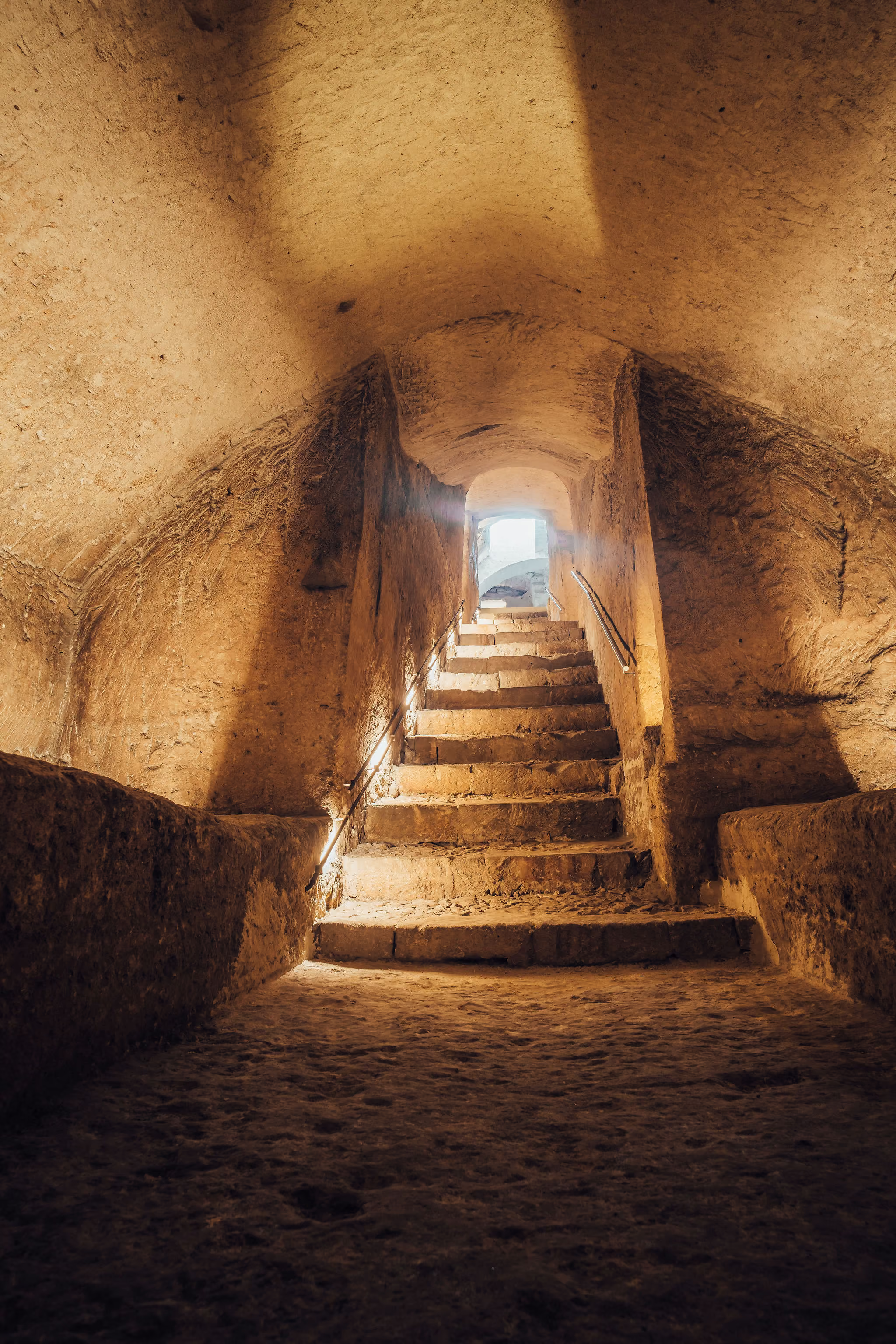
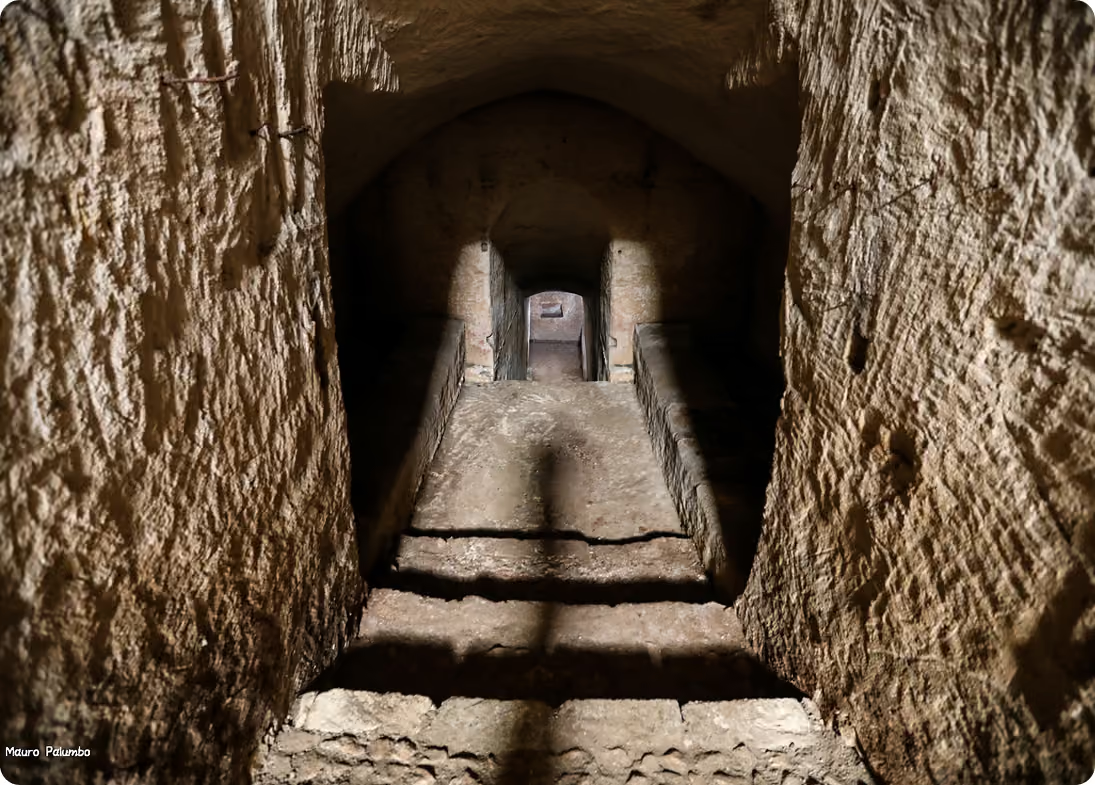
As you descend along the Tromba, the FOVEA staircase, each step tells a story spanning millennia. Small fossils of Pliocene-Pleistocene shells—dating from about 5 to 2 million years ago—are visible in the rock, trapped in the calcarenite and brought to light by the hands of master stonecutters.
The marks left by axe-tipped picks are etched into the walls, like a mosaic of hard work and craftsmanship: a silent testament to the immense effort required to carve out the “Sotterri” or “Sterri”—the storage rooms—deep within the bedrock, where the wine found shelter, silence, and the time needed to mature.
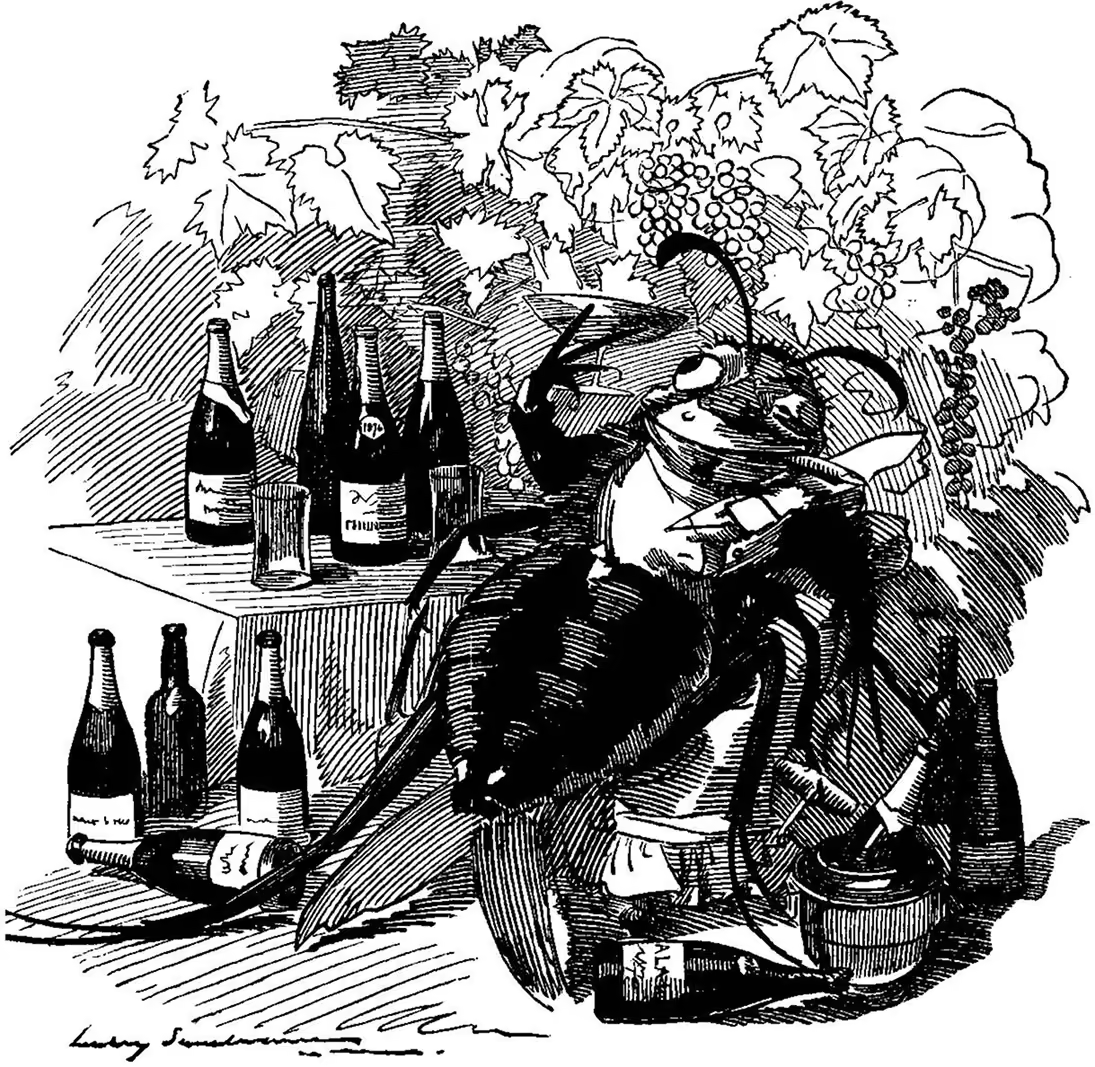
In 1907, phylloxera struck the vineyards of the Matera region. An invisible and devastating pest that had arrived from the New World, hidden among the roots of the first American grapevines imported into Northern Europe in the second half of the 19th century. An unwelcome guest that, in just a few decades, brought the viticulture of an entire continent to its knees.
Ironically, salvation came from the very source of the threat: grafting onto American rootstocks. Those same roots from across the ocean—naturally hardened by millennia of coexistence with the pest—became the new foundation onto which European grapevines could be grafted. An act of resilience that proved to be the only truly effective method applicable on a large scale.
Research confirmed what nature had already established: the American rootstock transfers only its own resistance to the parasite to the plant, leaving the organoleptic properties and distinctive character of the grafted vine variety intact. The European vine survived with new roots and its character unchanged.
What had been one of the most feared scourges of European agriculture in the 19th century is today a virtually harmless insect, but its appearance in the Matera region marked the end of a long tradition of viticulture. The rural economy shifted to wheat production, with all the vineyards uprooted; Matera, with its historic mills, became one of the key centers of flour production in Southern Italy.
The city’s economy changed, but the wine culture has been passed down from father to son: thanks to small-scale family production, ancient traditional methods and historic grape varieties have survived to the present day. Today, the winemaking tradition that survived the phylloxera infestation is the crown jewel of the Matera region’s wine offerings.
Primitivo
Primitivo has been grown in the Matera region for centuries, cultivated on the clay-rich hills that slope down toward the Ionian Sea. Under the Matera DOC regulations, it is recognized as a single-varietal wine (min. 90%) in its own category, in both dry and passito versions, and is also a mandatory component of Matera Rosso and Matera Rosato. Its extremely early ripening—hence its name—historically meant it was harvested as early as late July or August in the hottest areas of the Murgia.
“Primitivo from Matera is like the landscape seen from high above the Murgia in August: warm, generous, and immediately striking in its beauty. But beneath that softness lies the limestone of the Murgia, which supports its structure.”
Malvasia
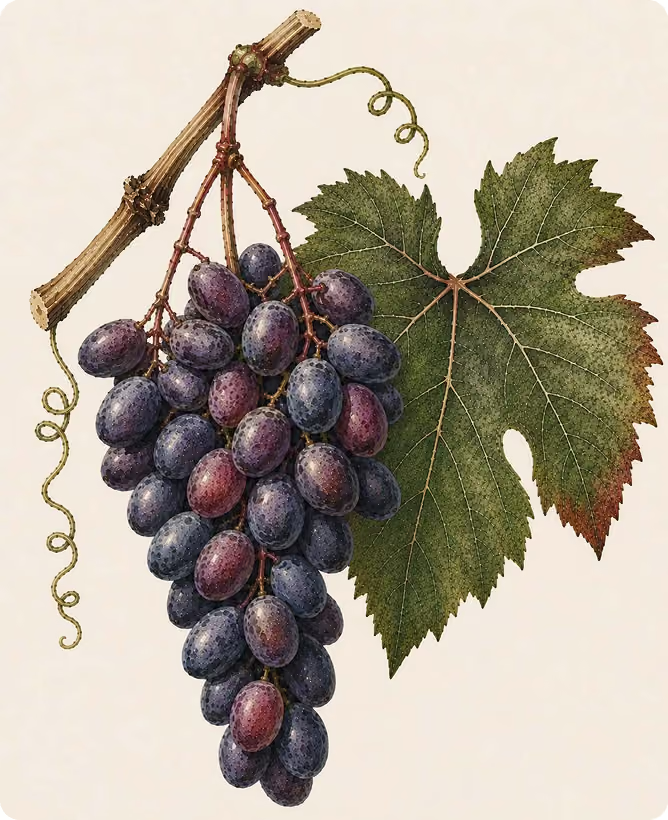
The vineyards of the Murgia di Matera, situated on calcareous-clay soils at 300–500 meters above sea level, give Basilicata’s Malvasia Bianca a dual identity: on the one hand, the generous floral aromas typical of the Malvasia family; on the other, a crisp acidity and a mineral-limestone note that is unusual for a white wine from Southern Italy. The temperature variation between the sunny days of the Lucanian hinterland and the cool nights of the Murgia preserves the terpenes responsible for the scents of orange blossom and jasmine.
“Bringing a Matera Bianco made from Malvasia to your nose evokes the feeling of a September morning in the ravines: the dry air of the Murgia, the scent of sun-scorched Mediterranean scrub, and, suddenly, the fragrance of orange blossoms carried by the Ionian wind. It is one of the few white wines from the South that manages to be both sumptuous and fresh at the same time.”
Aleatico
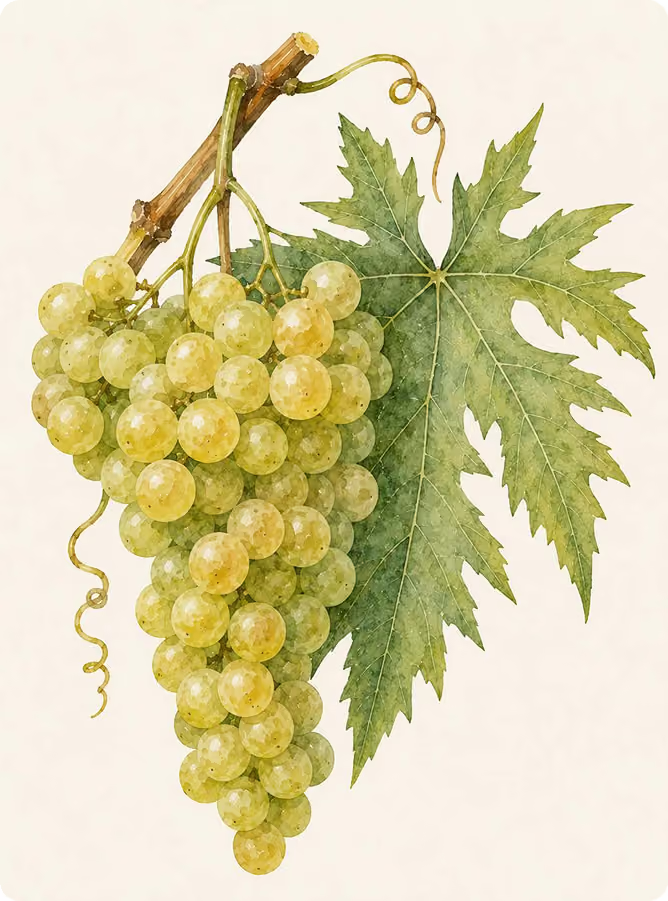
Aleatico is one of Italy’s oldest grape varieties. In the Matera area, it is cultivated as an IGT grape variety and represents the region’s oldest winemaking tradition. Its semi-aromatic character makes it unique among the red wines of Basilicata: it brings the aromas of Malvasia to the glass, combined with the body and color of full-bodied reds. Production has always been limited, with vines often over a century old and yields extremely low.
“Bringing an Aleatico Passito from the Murgia di Matera to your nose is like being hit in the face by a red rose: sudden, generous, almost immodest. Then comes the moss, then the caramelized dried fig, then that subtle limestone note that reminds you of where you are. It is the only wine in the world that can be, at the same time, a flower, a fruit, a spice, and a stone.”
Greek
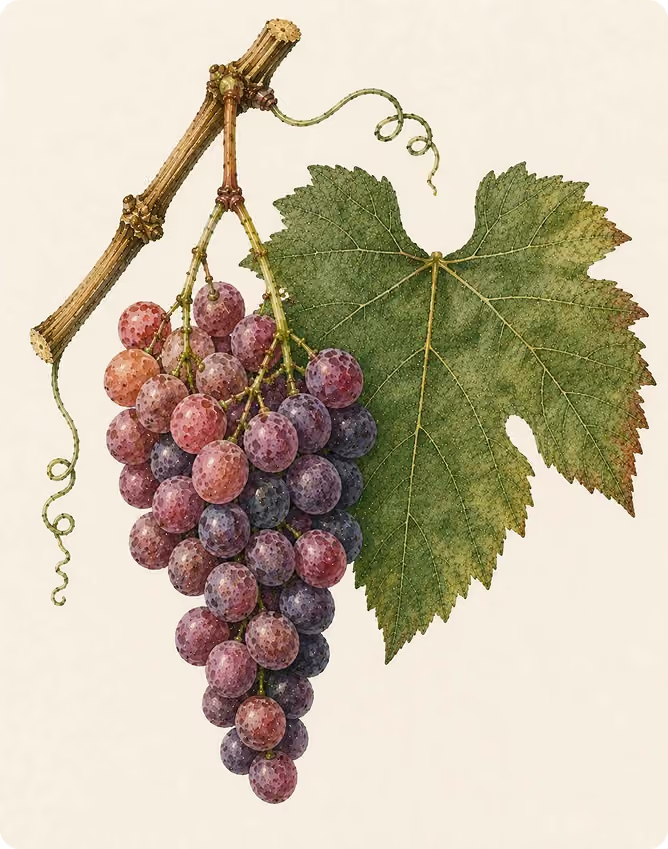
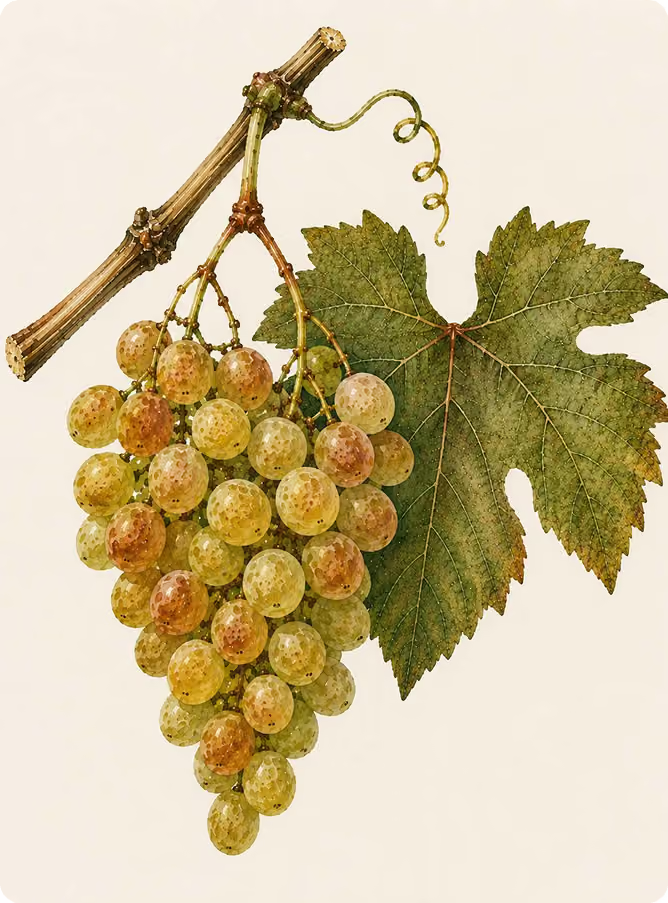
Greco is a grape variety that has been cultivated in the Matera area since the time of the Greek colonists of Oenotria (7th–6th centuries B.C.) on the Ionian coast of Lucania. Matera DOC Greco is one of the finest DOC white wines from Basilicata.
It exhibits a unique character within the Italian Greco landscape: warmer than the Campanian varieties (Greco di Tufo) and more savory than the Calabrian ones (Cirò Bianco), with a distinctive aromatic persistence that—as the production regulations state—allows it to age elegantly for up to 6–8 years in the best vintages.
“Matera Greco doesn’t reveal itself right away. You have to let it breathe in the glass: at first it’s almost reserved, almost stony. Then comes the peach, followed by that iodine note that reminds you that the Ionian Sea is just forty kilometers away. It’s the most ‘Greek’ wine in all of Basilicata, in the most ancient sense: austere, mineral, with millennia of history fermenting in the glass.”
Aglianico
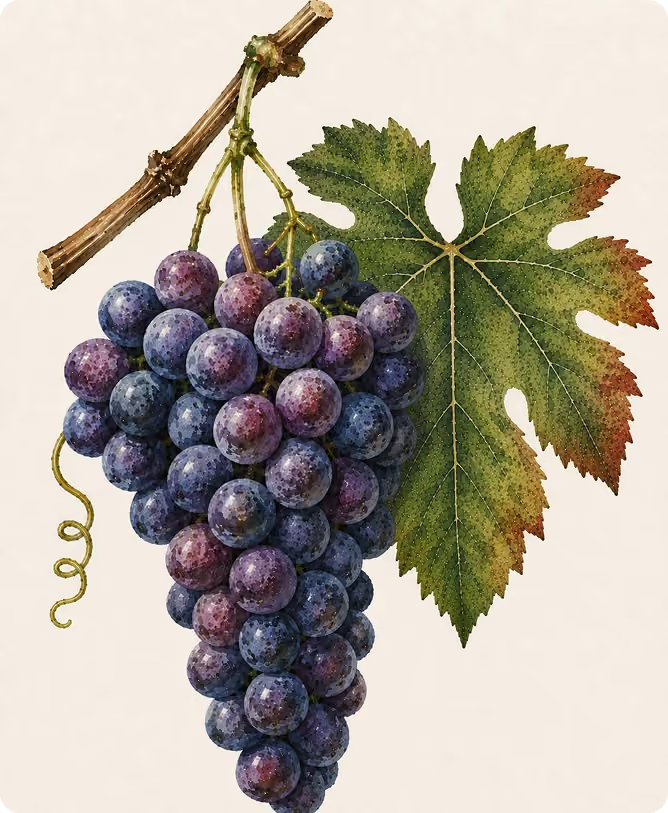
The Aglianico grown on the hills of Matera ripens more slowly and later (October–November) than in other regions of Basilicata. This extended growing season, combined with the temperature fluctuations of autumn nights, allows for exceptional tannin concentration and anthocyanin accumulation, producing wines of extraordinary longevity that can age elegantly for 15–25 years in the bottle.
“Opening a ten-year-old Aglianico del Materano is like opening a ravine with your hands: hard, austere, almost hostile at first contact. Then, slowly, it opens up, and within you find the entire landscape of the Murgia: the limestone bathed in November rain, the thyme scorched by August heat, the prunes laid out on racks to dry. It is one of the few Italian wines that is in no hurry to please.”

Take this piece of history with you.
The next one is waiting for you!